
The War’s Human Cost
Henry VThis thread follows the material and emotional damage produced by the campaign, from threatened civilians to the exhausted, dead, and grieving.
increasing Bearing strength in each event
 decreasing
Bearing strength in each eventdecreasingThe Danger to Harfleur
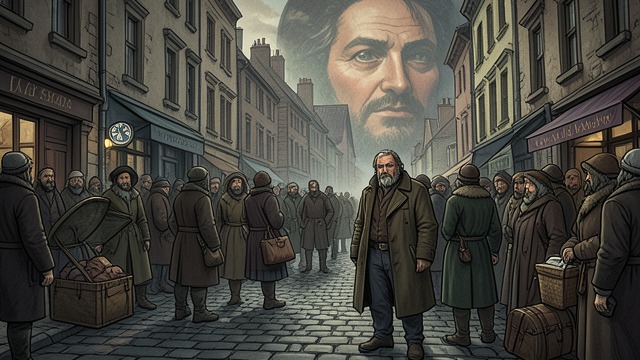
The Danger to Harfleur
Civilians at risk
King Henry V warns that a renewed assault may expose the town’s people to uncontrolled violence. His speech makes civilian suffering central to the decision to surrender.
A threatened reprieve
The governor yields, and the king orders mercy after the town is taken. The danger is averted in this moment, but only after the threat has shaped the outcome.
An Army Worn Down
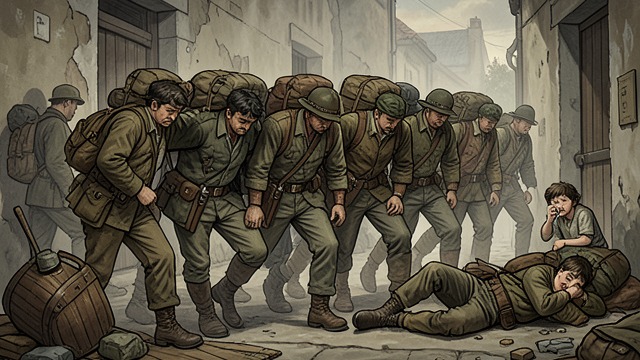
An Army Worn Down
Illness and attrition
Sickness and exhaustion reduce the English army before it reaches Agincourt. The soldiers’ weakness makes the campaign’s success uncertain.
Human limits exposed
The force that must continue marching is made of bodies vulnerable to hunger and disease. Military ambition is measured against physical depletion.
A Night of Fear
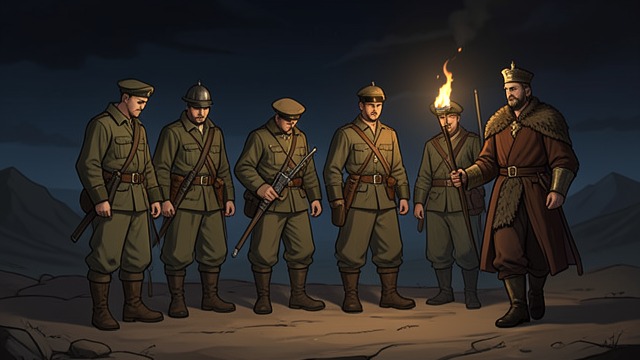
A Night of Fear
The danger becomes intimate
The English camp faces an enemy with overwhelming numbers. Soldiers anticipate not an abstract defeat but the possible end of their lives and households.
Courage does not erase fear
King Henry V visits the troops with a composed public manner. The soldiers’ anxiety remains present beneath the inspirational language of honor.
Grief for York and Suffolk
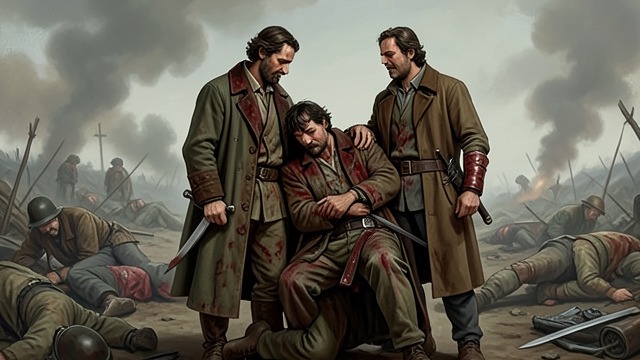
Grief for York and Suffolk
Death inside victory
The Duke of York and the Earl of Suffolk die amid the battle. Exeter recounts York’s final attachment to his wounded companion.
Loss made visible
The king responds with tears when he hears the story. The emotional account interrupts triumph with the intimacy of friendship and death.
The Casualty Count
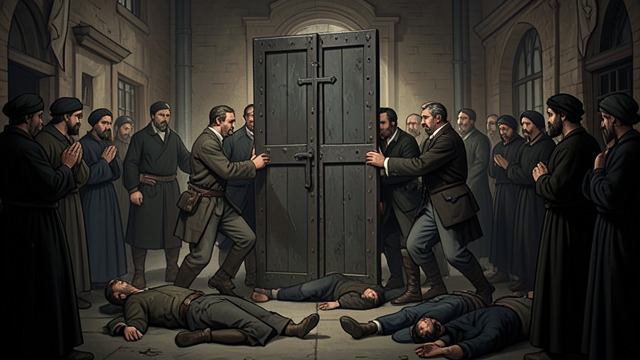
The Casualty Count
An immense French loss
The report records thousands of French dead, including nobles and commanders, against a much smaller English toll. Numbers establish the scale of the victory and of the destruction.
Mourning remains necessary
King Henry V orders the dead to be buried and forbids boasting. The accounting cannot restore lives, but it shapes how survivors are permitted to remember them.
At the final summons before Harfleur surrenders
During the march from Harfleur toward Calais
The eve of Agincourt
During the fighting at Agincourt
After the battle, when the dead are counted
